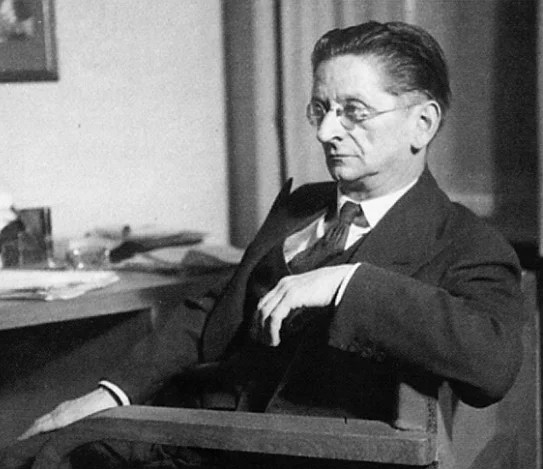
Alexander Zemlinsky is a pivotal figure in the early 20th century. First discovered and promoted by Brahms, Zemlinsky established himself as one of the leading conductors and teachers in Vienna and throughout German speaking countries. Zemlinsky taught all of the Second Viennese School composers—Schoenberg, Berg, Webern—along with other Viennese composers. As a composer, Zemlinsky’s style is closer to the late romantic period, as he never adopted Schoenberg’s experimentation with the twelve tone technique. He was a champion and conductor of Schoenberg’s early works; later, however they had a falling out because Zemlinsky disavowed the 12 tone technique.
As a conductor, Zemlinsky championed new works by several composers including Hindemith, Krenek, Schulhoff, and Weill. In 1931, Zemlinsky conducted the Berlin premiere of Weill’s Aufstieg und Fall der Stadt Mahagonny starring Lotte Lenya. Zemlinsky’s appreciation for Zeitopern, and the in-depth knowledge of the music by the composers above help explain how at the age of 60, he wrote an opera, Der Kreidekreis, that uses extensive saxophone solos throughout the work.
Universal Editions describes the opera as a mixture of styles, “Der Kreidekreis a Chinese ‘detective story’ from the 14th century – tells of the fate of a poor girl exposed to the caprices of power… Typically for Alexander Zemlinsky, it contains a fascinating mixture of drama and lyricism. It intertwines Wagneriana with banal music and cabaret scenes à la Kurt Weill, mixes Mahler and Strauss with far-eastern sounds, while singing, speaking and playing all take place on stage.” Der Kreidekreis premiered less than a decade after one of the most famous Chinese influenced operas, Turandot by Puccini. One can see Zemlinsky continuing the path of late romanticism in his work. The opera begins with an extended alto saxophone solo heard below. This saxophone solo appears throughout the work at key moments.
The opera was originally scheduled to premiere in Berlin in 1933 at the Staatsoper but was postponed after the Nazi’s swept into power. Frustrated by the delay in the premiere, Zemlinsky asked his publishers, “Are the problems with the libretto – the music – myself?” Zemlinsky was raised in a Jewish household, but converted to Protestantism in the 1900s. Once Jews were excluded from employment by the Law for the Restoration of the Professional Civil Service, Zemlinsky quit his job in Berlin and left for Vienna in April 1933.[1] The world premiere of Der Kreidekreis took place in Zurich in October, 1933. The premiere’s success led to its performance in Berlin.
The saxophone themes in the opera are quite explicit—they define the opera, giving the audience a clear understanding of the modernist tones from the start. The Berlin premiere takes a more unusual turn. There was a noted absence of woodwinds, possibly because of the chaotic nature of the Nazis banning professionals from civic jobs the year before. To make up for that loss, Zemlinsky employed a quartet of saxophones to cover the woodwind parts. One reviewer compares this opera to Turandot and how it pushes the limits of the late romanticism exoticism in instrumentation.[2]
This use of the saxophone quartet is only present in the Berlin premiere, a historical anomaly. Not long after the Berlin performance, the Nazis banned this opera from being performed in Germany.[3] Disappointed, Zemlinsky turned his efforts to his next opera, Der König Kandaules, which he completed in 1936. The annexation of Austria forced Zemlinsky to abandon the orchestration of this opera and he and his family fled Vienna for NYC in 1938.[4] Attempting to re-establish his career in the United States, he reached out to the Metropolitan Opera to see if they were interested in Der König Kandaules, but the nude seen in Act II made the opera impossible to perform on an American stage.[5] The Met turned Zemlinsky down.
Unable to establish himself in the United States and suffering from poor health, Zemlinksy died in 1942 in relative obscurity. His compositions were forgotten for a period of time, only to be rediscovered in the 1970s. His opera Der König Kandaules finally received its premiere at the Hamburg State Opera in 1996. The orchestration was completed after his death by Anthony Beaumont. He includes the alto saxophone in the score, following his orchestration in Der Kreidekreis. The saxophone can be heard in the second act in the video below at (52:07, 1:00:05)
[1] https://holocaustmusic.ort.org/resistance-and-exile/alexander-zemlinsky/
[2] brüggemann, alfred. (1934). Corrispondenze dall’estero. Lettera dalla Germania [L’organizzazione delle attività musicali avviata dallo stato nazional-socialista: l’istituzione della Camera della musica, presidente Richard Strauss, formata da otto gruppi professionali. Il “caso” Hindemith. Il concerto inaugurale: le musiche eseguite] – Berlino [Concerti diretti da Furtwaengler, Respighi (con proprie musiche), Schuricht, Kleiber. Concerti delle società corali. Staatsoper: von Reznicek, Donna Diana; Alexander von Zemlinsky, Il Giro di creta (Der Kreidekreis); Strauss, Die ægyptische Helena. Städtische Oper: Peter Cornelius, Il Barbiere di Bagdad. La musica alla Radio] (Continua). Musica d’oggi, XVI(3), 107–110.
[3] The Opera Composer/III Der Kreidedreis-uncompleted projects. https://www.zemlinsky.at/en/creativity/the-opera-composer-III
[4]Beaumont, A. (2001). Zemlinsky [Zemlinszky], Alexander. Grove Music Online. Retrieved 18 Jul. 2024, from https://www-oxfordmusiconline-com.proxy.lib.duke.edu/grovemusic/view/10.1093/gmo/9781561592630.001.0001/omo-9781561592630-e-0000030919.
 the Operatic Saxophone
Leave a comment