Mary Huntimer
-
The Jazz Influences in Shostakovich’s The Golden Age
Dmitri Shostakovich (1906-1975) is one of the most celebrated composers of 20th-century symphonic works. Despite that reputation, his ballets receive less attention and that is a major oversight in music history. His failure on the ballet stage has nothing to do with the quality of the music in the ballet, but around the volatile political…
-
The saxophone and Oedipus, how George Enescu used the saxophone in his only opera, OEdipe
George Enescu (1881-1955) is one of Romania’s best known composer. Enescu was a musical prodigy, studying music in Vienna at the age of 7 before transferring to the Paris Conservatoire in 1895. At the Conservatoire, he studied composition under Jules Massenet and Gabriel Fauré. He remained active in Paris as a violinist and conductor of…
-
Joseph Holbrooke and the saxophone in his opera trilogy
In the early 20th century, the saxophone fell out of favor in opera and ballet. In the database, there are only a small handful of operas that premiered before WWI. Out of that small number, two operas are by English composer Joseph Holbrooke (1878-1958). Who is Holbrooke and how did the saxophone end up in…
-
Watch the saxophone solos in Léo Delibes ballet, “Sylvia”
In 2019, the Wiener Staatsoper ballet staged Sylvia by Léo Delibes. This classic Romantic styled staging harkens back to the premiere of the ballet at the Palais Garnier in its opening season 1876. The ballet was poorly received when it premiered, but with the strength of its score and new stagings and choreography, the ballet…
-
Saxophonist Steve Lacy’s opera “The Cry” is now in the database
Saxophonist Steve Lacy (1934-2004) is one of preminent players of the soprano saxophone, first starting in Dixieland then branching out to the works of Thelonious Monk. Later in his career, he traveled extensively focusing on chamber works and free improvisation. In 1996 during a residency in Berlin, he wrote The Cry, a jazz opera based…
-
Erwin Schulhoff’s Flammen returns to the stage 90 years after its debut
Czech composer Erwin Schulhoff’s only opera, Flammen is returning to the stage in the original Czech for the first time since its premiere in 1932. The opera is a part of the National Theatre of Prague’s Musica non Grata series—translation: unwelcomed music—“revives the artistic legacy of male and female composers important to the musical life…
-
Discover Günter Raphael’s ballet, Jabonah
Günter Raphael’s (1903-1960) life was surrounded by war and upheaval. Born into a musical family in Germany, he entered the Hochschule für Musik in Berlin in 1922. In 1926 he became professor of composition and theory at State Conservatory and at the Kirchenmusikalisches Institut, Leipzig in 1926. But this was short lived. When Nazis assumed…
-
A complete recording of Saint-Saëns’ Henry VIII now available
Odyssey Opera, a company based in Boston, MA, just released the very first complete recording of Saint-Saëns’ Henry VIII. You can find the 4 disc CD here. Henry VIII is a grand opera premiering at the Palais Garnier in 1883. The opera was incredibly popular at the time, with performances at the Royal Opera House…
-
A Saxophone oratorio? Listen to Wladimir Vogel’s 1930 oratorio, Wagadus Untergang durch die Eitelkeit
When I started making the list of operas and ballets in the database, I did not include oratorios for one simple reason, the saxophone wasn’t used in oratorios. There’s an exception here and there (Massenet has an oratorio in this database) but for the most part, the oratorio excludes the saxophone. Imagine my surprise when…
-
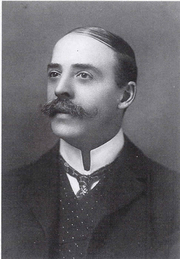
The Saxophone and Thor- Discover Frederic Hymen Cowen’s opera, Thorgrim
The English have a long tradition of the saxophone in opera, longer than you might imagine. Before finding Thorgrim, the first English opera I have in my database is Joseph Holbrooke’s The Children of Don, written in 1912. But it turns out the saxophone was heard in the opera house long before 1912. The English…
 the Operatic Saxophone